
Barcolana in Trieste: What It Is, When It Happens, and Why Is So Important For The City

Every October, Trieste changes pace. The city’s seafront fills with boats, events, visitors, and a kind of energy that is hard to miss even if you know nothing about sailing. At the center of it all is the Barcolana, the historic regatta that has become one of Trieste’s most iconic annual events and a defining moment in the city’s calendar.
But the Barcolana is much more than a sporting event. Over the years, it has grown into something that involves the whole city: locals, sailors, families, tourists, restaurants, businesses, and everyone who wants to experience Trieste at its liveliest. For a few days, the sea becomes the main stage, and the relationship between Trieste and its waterfront is on full display.
In this guide, we’ll look at what the Barcolana is, when it takes place, and why it plays such an important role in Trieste’s identity, atmosphere, and appeal.
What Is the Barcolana?
The Barcolana is Trieste’s most famous annual event and one of the best-known sailing regattas in Europe. Held every year in the Gulf of Trieste, it brings together professional sailors, experienced crews, amateur boat owners, and thousands of spectators for a race that has grown far beyond the boundaries of competitive sailing.
Founded in 1969 by the Società Velica di Barcola e Grignano, the Barcolana started as a local regatta and gradually became an international event with enormous visibility for the city. Today, it is widely known for its unique format: boats of very different sizes share the same starting line and race on the same course, creating a spectacular scene in the Gulf and a very different atmosphere from that of a traditional elite sailing competition.
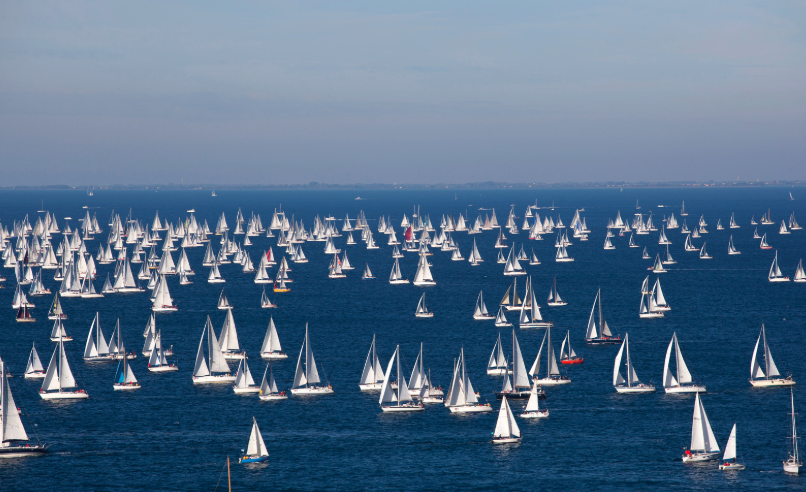
Over time, the Barcolana has become much more than a race. It is now one of the moments of the year when Trieste feels most alive, with the waterfront, the city center, and many local businesses all revolving around a single event. For locals, it is part sporting tradition, part civic celebration, and part showcase of Trieste’s identity as a city deeply connected to the sea.
When Does the Barcolana Take Place?
The Barcolana takes place every year in Trieste on the second Sunday of October, with the main regatta held in the Gulf of Trieste. However, if you are planning to experience the event, it is worth knowing that the Barcolana is no longer just a one-day race. Over time, it has grown into a broader city-wide festival that usually unfolds over several days, with side events, smaller races, exhibitions, cultural initiatives, and a lively waterfront atmosphere building up before the main regatta itself.
That distinction matters because the real Barcolana experience begins well before race day. In the days leading up to the event, Trieste becomes noticeably busier and more animated, especially around the Rive, Barcola, and the city center. Sailing crews arrive, temporary event spaces and hospitality areas open up, and the seafront starts to fill with visitors, locals, and boats preparing for the weekend.
For anyone visiting Trieste, or thinking about spending time in the city in autumn, the best approach is to think in terms of Barcolana week rather than just the Sunday race. The regatta is the climax, but the atmosphere that makes the event special is already there in the days before it.
Why the Barcolana Is So Important for Trieste
To understand why the Barcolana matters so much to Trieste, it helps to look beyond the regatta itself. This is not simply a major sporting event that happens to take place in the city once a year. It is one of the clearest expressions of Trieste’s identity: a city shaped by the sea, defined by its waterfront, and historically connected to trade, navigation, and maritime culture.
During the Barcolana, that connection becomes impossible to miss. The sea is no longer just part of the city’s landscape; it becomes the center of public life. The waterfront fills with spectators, hospitality spaces, events, and boats, while cafés, restaurants, and public spaces become part of a shared atmosphere that extends well beyond the race itself. In a city that already has a very strong relationship with the water, the Barcolana turns that relationship into a visible, collective experience.
The event is also important because it changes the way many people experience Trieste for the first time. Visitors do not just come to watch a regatta; they see a city that is elegant, walkable, maritime, and unusually tied to its coastline. They experience Barcola, the Rive, Piazza Unità d’Italia, and the everyday rhythm of a place where the sea is never far away. For many, the Barcolana becomes an introduction to Trieste itself and a reminder that this is not just a city to visit, but one that is easy to imagine living in.
What Happens in Trieste During Barcolana Week
Barcolana week is when the event stops feeling like a regatta on the calendar and starts feeling like a city-wide takeover. In the days leading up to the main race, Trieste becomes noticeably more crowded, more animated, and more outward-facing. The waterfront fills with boats, branded spaces, temporary installations, and spectators, while bars, restaurants, and public areas take on the atmosphere of a long open-air celebration rather than a normal week in October.
Part of what makes the Barcolana special is that it unfolds on several levels at once. On the water, there are smaller races, warm-up events, and sailing-related initiatives involving different categories of participants, from young sailors to classic boats and competitive crews. On land, the event spreads across the city with talks, exhibitions, sponsor villages, food and wine areas, cultural initiatives, and a constant flow of people along the Rive and around central Trieste. Even if you are not following the regatta itself, it is difficult to spend time in the city during those days without feeling drawn into it.
For visitors, this changes the experience of Trieste in a very practical way. Hotels and short-term rentals become busier, the seafront becomes the natural center of the city, and everyday spaces feel more social and more energetic than usual. For locals, it is one of the moments of the year when Trieste feels most open, visible, and connected to the sea that defines it. For anyone seeing the city for the first time, Barcolana week offers a version of Trieste that is festive, scenic, and unusually easy to remember.
Where to Watch the Barcolana in Trieste
One of the reasons the Barcolana is such a compelling event to watch is that Trieste offers several excellent viewpoints, each with a different perspective on the regatta. If you want to see the spectacular start, Barcola is the most obvious choice: this stretch of waterfront sits right next to the starting area and gives you a close view of the boats lining up in the Gulf. It is also one of the liveliest places to be during Barcolana week, with crowds, movement, and a strong sense that the whole city is oriented toward the sea.
If you would rather watch the event from the city center, the Rive and the area around Piazza Unità d’Italia are among the best places to experience the atmosphere on land. These are ideal if you want to combine the regatta with the broader city event: the waterfront is full of people, the Barcolana village and related initiatives are close by, and you are in one of the most iconic parts of Trieste. Depending on the year’s course layout, this area can also be a particularly good place to follow the later stages of the race and the arrival.
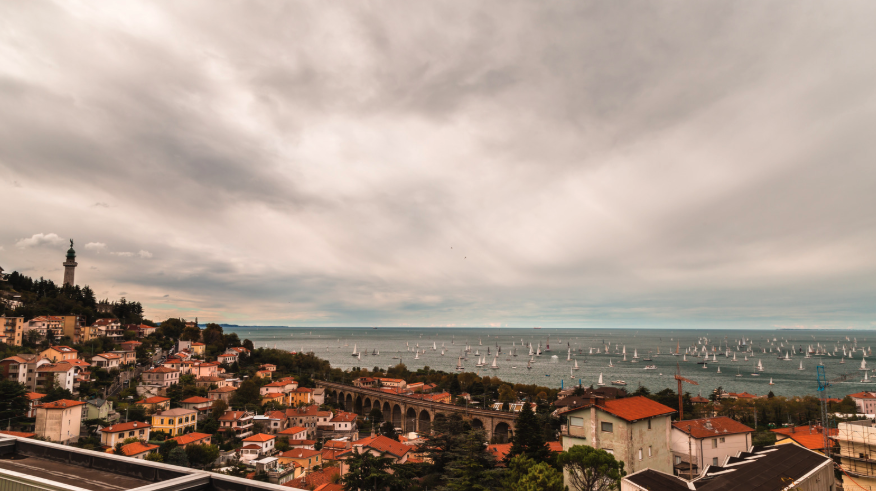
For a wider panoramic view, many people head up to the Karst viewpoints above the city, such as the Napoleonic Road, the Obelisk area in Opicina, or other elevated spots along the Trieste hillside. From there, the Barcolana becomes less about individual boats and more about the extraordinary scale of the event: a gulf filled with sails, with Trieste, Barcola, and Miramare all visible in the background. If your goal is to understand why the Barcolana is visually so memorable, these higher viewpoints are among the most striking places to watch it.
In practical terms, the best place depends on the kind of experience you want. Barcola is best for feeling close to the start and the maritime side of the event, the Rive and Piazza Unità are best for combining the regatta with the city atmosphere, and the Karst viewpoints are best if you want the broadest and most scenic view over the Gulf of Trieste.
What to Expect If You Visit Trieste During the Barcolana
If you visit Trieste during the Barcolana, the first thing to expect is a city that feels busier, more social, and more energetic than usual. The seafront becomes the natural center of everything: boats fill the Gulf, event spaces appear along the waterfront, and the streets around the Rive, Piazza Unità d’Italia, and Barcola attract a steady flow of visitors, locals, and sailing crews throughout the day. Even if you arrive without a specific plan, it is easy to spend hours simply walking the waterfront and absorbing the atmosphere.
You should also expect Trieste to feel more international during Barcolana week. The event brings in participants, spectators, and visitors from outside the city, and that changes the rhythm of daily life in a noticeable way. Restaurants and cafés tend to be busier, accommodation can be harder to find, and some parts of the city feel more event-driven than they would during a normal autumn week. If you are planning to come specifically for the regatta, booking accommodation early is the sensible move.
At the same time, the Barcolana is not a chaotic mega-event in the way some festivals or major sporting occasions can be. Trieste still feels like Trieste: elegant, walkable, and strongly tied to the sea rather than overwhelmed by the event itself. In practice, visiting during the Barcolana means seeing the city at one of its liveliest moments, when its maritime identity, public spaces, and waterfront culture are all more visible than usual.
Why the Barcolana Shows What It’s Like to Live in Trieste
For anyone considering spending more time in Trieste, the Barcolana offers something more revealing than a normal city break. It shows the city in use. Not just its architecture, seafront, or famous landmarks, but the way people actually live it: how central the waterfront is to daily life, how walkable the city feels, how naturally the sea is woven into everyday routines, and how public spaces become part of the social fabric of the city.
That matters because Trieste is not a place where the coastline is separate from urban life. Areas like Barcola, the Rive, and the city center are not occasional attractions; they are part of the lived experience of the city. During the Barcolana, that becomes even more visible. You see residents spending hours by the water, meeting friends outdoors, moving easily between the center and the seafront, and treating the sea as a normal part of city life rather than a backdrop. In that sense, the event offers a very clear snapshot of what makes Trieste different from many other Italian cities.
For some visitors, it’s precisely at this point that the city begins to seem less like a tourist destination and more like a place they could actually imagine living, and it can be helpful to contact a property finder in Trieste. The Barcolana condenses many of the things that make the city appealing: the maritime atmosphere, the manageable scale, the elegance of the center, the openness of the waterfront, and the sense that everyday life here can feel both urban and closely connected to nature. If you want to understand Trieste beyond its postcard image, visiting during the Barcolana is one of the clearest ways to do it.
Thinking about spending more time in Trieste? Book a free call to discover how we can help you: